AMC12竞赛成绩对申请大学有什么帮助?AMC12都有哪些奖项?

AMC12数学竞赛是一项高含金量的数学竞赛,由美国数学家协会组织。在全球名校中,AMC竞赛的认可度相当高。参加AMC12竞赛并取得良好的成绩可以提升学生申请名校的概率。

AMC12考察内容

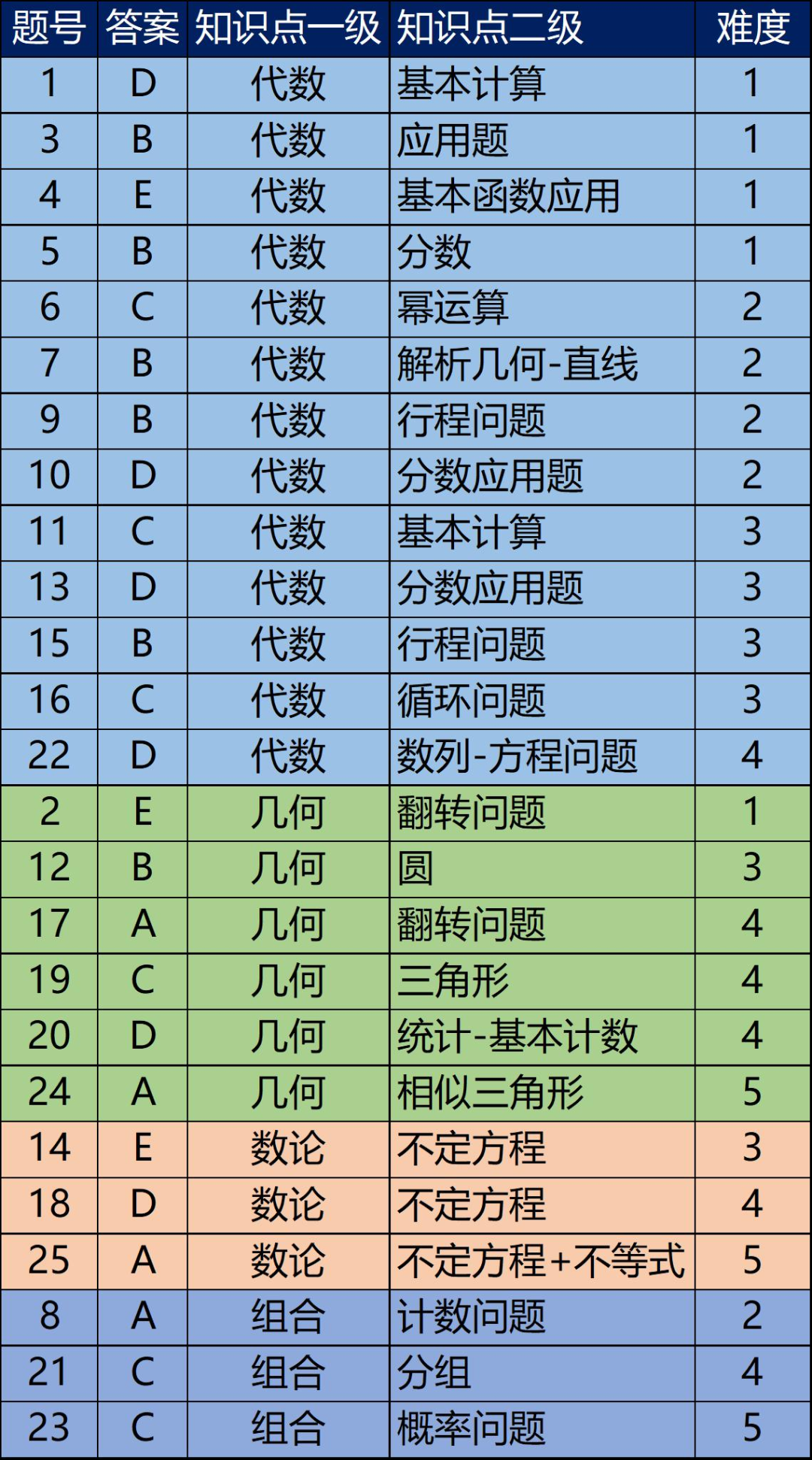
AMC12考题重点多集中在进阶平面几何与立体几何、进阶代数、组合计数、综合数论、复数、对数与对数函数、多项式等,和AMC10竞赛相比,AMC12竞赛知识点新增:

进阶代数

复杂不等式、调和不等式、轮换不等式、柯西不等式;复杂函数问题,反函数和符合函数,三角函数和差化积、积化和差,万能公式;复数,复平面,欧拉公式,蒂莫夫公式;数学归纳法、复杂数列和极限。

进阶几何

圆相关几何进阶;数形结合,二维、三维图形的函数表达,进阶解析几何;不规则二维、三维图形的处理;二维向量、三维向量

进阶数论

二次余数,高次余数、费马圣诞节定理、费马小定理;各类丢番图方程的解法

进阶组合

随机过程和期望;复杂组合问题技巧、基本综合问题

AMC12竞赛成绩对申请大学的影响:

- AMC12竞赛成绩全球前2.5%至5%:有利于申请美国综合排名前30至50的大学。

- AMC12竞赛成绩达到全球前2.5%,或AIME成绩达到7分或以上:有利于申请美国综合排名前30的大学。

- AMC12竞赛成绩达到全球前1%,或AIME成绩达到8分或以上:有利于进入美国排名前20的大学。

在一些知名大学如麻省理工学院(MIT)、加州理工学院(Caltech)、斯坦福大学等的申请页面,会要求学生专门填写AMC竞赛成绩。

据麻省理工学院的招生官表示,如果学生提交了AMC成绩,并晋级到AIME阶段,那么进入MIT的几率约为20%。如果学生晋级到USA/JMO阶段,进入MIT的几率为50%。而如果学生晋级到IMO阶段,几乎可以确保被MIT录取。

AMC12竞赛奖项及分数线

Perfect Score

获奖条件:在竞赛中拿到满分

Honor Roll of Distinction

获奖条件:成绩达到全部参赛者的前1%

Honor Roll

获奖条件:成绩达到全部参赛者的前5%

Certificate of Achievement

获奖条件:参赛者为10年级及以下,且获得90分及以上分数

扫码咨询AMC10/12长线备考班,一站式搞定AMC10/12!

2013年USAJMO 真题及答案

Day 1

Problem 1

Are there integers $a$ and $b$ such that $a^5b+3$ and $ab^5+3$ are both perfect cubes of integers?

Problem 2

Each cell of an $m\times n$ board is filled with some nonnegative integer. Two numbers in the filling are said to be adjacent if their cells share a common side. (Note that two numbers in cells that share only a corner are not adjacent). The filling is called a garden if it satisfies the following two conditions:

(i) The difference between any two adjacent numbers is either $0$ or $1$.

(ii) If a number is less than or equal to all of its adjacent numbers, then it is equal to $0$.

Determine the number of distinct gardens in terms of $m$ and $n$.

Problem 3

In triangle $ABC$, points $P,Q,R$ lie on sides $BC,CA,AB$ respectively. Let $\omega_A$$\omega_B$$\omega_C$ denote the circumcircles of triangles $AQR$$BRP$$CPQ$, respectively. Given the fact that segment $AP$ intersects $\omega_A$$\omega_B$$\omega_C$ again at $X,Y,Z$ respectively, prove that $YX/XZ=BP/PC$.

Day 2

Problem 4

Let $f(n)$ be the number of ways to write $n$ as a sum of powers of $2$, where we keep track of the order of the summation. For example, $f(4)=6$ because $4$ can be written as $4$$2+2$$2+1+1$$1+2+1$$1+1+2$, and $1+1+1+1$. Find the smallest $n$ greater than $2013$ for which $f(n)$ is odd.

扫码添加顾问即可免费领取完整版
还有更多USAJMO 历年真题+真题详解

2014年USAJMO 真题及答案

Day 1

Problem 1

Let $a$$b$$c$ be real numbers greater than or equal to $1$. Prove that\[\min{\left (\frac{10a^2-5a+1}{b^2-5b+10},\frac{10b^2-5b+1}{c^2-5c+10},\frac{10c^2-5c+1}{a^2-5a+10}\right )}\leq abc.\]Solution

Problem 2

Let $\triangle{ABC}$ be a non-equilateral, acute triangle with $\angle A=60^\circ$, and let $O$ and $H$ denote the circumcenter and orthocenter of $\triangle{ABC}$, respectively.

(a) Prove that line $OH$ intersects both segments $AB$ and $AC$.

(b) Line $OH$ intersects segments $AB$ and $AC$ at $P$ and $Q$, respectively. Denote by $s$ and $t$ the respective areas of triangle $APQ$ and quadrilateral $BPQC$. Determine the range of possible values for $s/t$.

Problem 3

Let $\mathbb{Z}$ be the set of integers. Find all functions $f : \mathbb{Z} \rightarrow \mathbb{Z}$ such that\[xf(2f(y)-x)+y^2f(2x-f(y))=\frac{f(x)^2}{x}+f(yf(y))\]for all $x, y \in \mathbb{Z}$ with $x \neq 0$.

Day 2

Problem 4

Let $b\geq 2$ be an integer, and let $s_b(n)$ denote the sum of the digits of $n$ when it is written in base $b$. Show that there are infinitely many positive integers that cannot be represented in the form $n+s_b(n)$, where $n$ is a positive integer.

更多USAJMO 历年真题+真题详解
扫码添加顾问即可免费领取

2016年USAJMO 真题及答案

Day 1

Problem 1

The isosceles triangle $\triangle ABC$, with $AB=AC$, is inscribed in the circle $\omega$. Let $P$ be a variable point on the arc $\stackrel{\frown}{BC}$ that does not contain $A$, and let $I_B$ and $I_C$ denote the incenters of triangles $\triangle ABP$ and $\triangle ACP$, respectively.

Prove that as $P$ varies, the circumcircle of triangle $\triangle PI_BI_C$ passes through a fixed point.

Problem 2

Prove that there exists a positive integer $n < 10^6$ such that $5^n$ has six consecutive zeros in its decimal representation.

Problem 3

Let $X_1, X_2, \ldots, X_{100}$ be a sequence of mutually distinct nonempty subsets of a set $S$. Any two sets $X_i$ and $X_{i+1}$ are disjoint and their union is not the whole set $S$, that is, $X_i\cap X_{i+1}=\emptyset$ and $X_i\cup X_{i+1}\neq S$, for all $i\in\{1, \ldots, 99\}$. Find the smallest possible number of elements in $S$.

Day 2

Problem 4

Find, with proof, the least integer $N$ such that if any $2016$ elements are removed from the set $\{1, 2,\dots,N\}$, one can still find $2016$ distinct numbers among the remaining elements with sum $N$.

扫码添加顾问即可免费领取完整版
还有更多USAJMO 历年真题+真题详解

2017年USAJMO 真题及答案

2017年USAJMO 真题

Day 1

Note: For any geometry problem whose statement begins with an asterisk ($*$), the first page of the solution must be a large, in-scale, clearly labeled diagram. Failure to meet this requirement will result in an automatic 1-point deduction.

Problem 1

Prove that there are infinitely many distinct pairs $(a,b)$ of relatively prime positive integers $a > 1$ and $b > 1$ such that $a^b + b^a$ is divisible by $a + b.$

Problem 2

Consider the equation\[\left(3x^3 + xy^2 \right) \left(x^2y + 3y^3 \right) = (x-y)^7.\]

(a) Prove that there are infinitely many pairs $(x,y)$ of positive integers satisfying the equation.

(b) Describe all pairs $(x,y)$ of positive integers satisfying the equation.

Problem 3

($*$) Let $ABC$ be an equilateral triangle and let $P$ be a point on its circumcircle. Let lines $PA$ and $BC$ intersect at $D$; let lines $PB$ and $CA$ intersect at $E$; and let lines $PC$ and $AB$ intersect at $F$. Prove that the area of triangle $DEF$ is twice the area of triangle $ABC$.

Day 2

Note: For any geometry problem whose statement begins with an asterisk ($*$), the first page of the solution must be a large, in-scale, clearly labeled diagram. Failure to meet this requirement will result in an automatic 1-point deduction.

Problem 4

Are there any triples $(a,b,c)$ of positive integers such that $(a-2)(b-2)(c-2) + 12$ is a prime that properly divides the positive number $a^2 + b^2 + c^2 + abc - 2017$?

更多USAJMO 历年真题+真题详解
扫码添加顾问即可免费领取

2018年USAJMO 真题及答案

2018年USAJMO 真题

Day 1

Note: For any geometry problem whose statement begins with an asterisk ($*$), the first page of the solution must be a large, in-scale, clearly labeled diagram. Failure to meet this requirement will result in an automatic 1-point deduction.

Problem 1

For each positive integer $n$, find the number of $n$-digit positive integers that satisfy both of the following conditions:

$\bullet$ no two consecutive digits are equal, and

$\bullet$ the last digit is a prime.

Problem 2

Let $a,b,c$ be positive real numbers such that $a+b+c=4\sqrt[3]{abc}$. Prove that\[2(ab+bc+ca)+4\min(a^2,b^2,c^2)\ge a^2+b^2+c^2.\]Solution

Problem 3

($*$) Let $ABCD$ be a quadrilateral inscribed in circle $\omega$ with $\overline{AC} \perp \overline{BD}$. Let $E$ and $F$ be the reflections of $D$ over lines $BA$ and $BC$, respectively, and let $P$ be the intersection of lines $BD$ and $EF$. Suppose that the circumcircle of $\triangle EPD$ meets $\omega$ at $D$ and $Q$, and the circumcircle of $\triangle FPD$ meets $\omega$ at $D$ and $R$. Show that $EQ = FR$.

Day 2

Note: For any geometry problem whose statement begins with an asterisk ($*$), the first page of the solution must be a large, in-scale, clearly labeled diagram. Failure to meet this requirement will result in an automatic 1-point deduction.

Problem 4

Triangle $ABC$ is inscribed in a circle of radius 2 with $\angle ABC \geq 90^\circ$, and $x$ is a real number satisfying the equation $x^4 + ax^3 + bx^2 + cx + 1 = 0$, where $a=BC,b=CA,c=AB$. Find all possible values of $x$.

更多USAJMO 历年真题+真题详解
扫码添加顾问即可免费领取

2019年USAJMO 真题及答案

2019年USAJMO 真题

Day 1

Note: For any geometry problem whose statement begins with an asterisk $(*)$, the first page of the solution must be a large, in-scale, clearly labeled diagram. Failure to meet this requirement will result in an automatic 1-point deduction.

Problem 1

There are $a+b$ bowls arranged in a row, numbered $1$ through $a+b$, where $a$ and $b$ are given positive integers. Initially, each of the first $a$ bowls contains an apple, and each of the last $b$ bowls contains a pear.

A legal move consists of moving an apple from bowl $i$ to bowl $i+1$ and a pear from bowl $j$ to bowl $j-1$, provided that the difference $i-j$ is even. We permit multiple fruits in the same bowl at the same time. The goal is to end up with the first $b$ bowls each containing a pear and the last $a$ bowls each containing an apple. Show that this is possible if and only if the product $ab$ is even.

Problem 2

Let $\mathbb Z$ be the set of all integers. Find all pairs of integers $(a,b)$ for which there exist functions $f:\mathbb Z\rightarrow\mathbb Z$ and $g:\mathbb Z\rightarrow\mathbb Z$ satisfying\[f(g(x))=x+a\quad\text{and}\quad g(f(x))=x+b\]for all integers $x$.

Problem 3

$(*)$ Let $ABCD$ be a cyclic quadrilateral satisfying $AD^2+BC^2=AB^2$. The diagonals of $ABCD$ intersect at $E$. Let $P$ be a point on side $\overline{AB}$ satisfying $\angle APD=\angle BPC$. Show that line $PE$ bisects $\overline{CD}$.

Day 2

Problem 4

$(*)$ Let $ABC$ be a triangle with $\angle ABC$ obtuse. The $A$-excircle is a circle in the exterior of $\triangle ABC$ that is tangent to side $BC$ of the triangle and tangent to the extensions of the other two sides. Let $E, F$ be the feet of the altitudes from $B$ and $C$ to lines $AC$ and $AB$, respectively. Can line $EF$ be tangent to the $A$-excircle?

更多USAJMO 历年真题+真题详解
扫码添加顾问即可免费领取

2021年USAJMO 真题及答案

2021年USAJMO 真题

Day 1

$\textbf{Note:}$ For any geometry problem whose statement begins with an asterisk $(*)$, the first page of the solution must be a large, in-scale, clearly labeled diagram. Failure to meet this requirement will result in an automatic 1-point deduction.

Problem 1

Let $\mathbb{N}$ denote the set of positive integers. Find all functions $f : \mathbb{N} \rightarrow \mathbb{N}$ such that for positive integers $a$ and $b,$\[f(a^2 + b^2) = f(a)f(b) \text{ and } f(a^2) = f(a)^2.\]

Problem 2

Rectangles $BCC_1B_2,$ $CAA_1C_2,$ and $ABB_1A_2$ are erected outside an acute triangle $ABC.$ Suppose that\[\angle BC_1C+\angle  CA_1A+\angle AB_1B=180^{\circ}.\]Prove that lines $B_1C_2,$ $C_1A_2,$ and $A_1B_2$ are concurrent.

Problem 3

An equilateral triangle $\Delta$ of side length $L>0$ is given. Suppose that $n$ equilateral triangles with side length 1 and with non-overlapping interiors are drawn inside $\Delta$, such that each unit equilateral triangle has sides parallel to $\Delta$, but with opposite orientation. (An example with $n=2$ is drawn below.)[asy] draw((0,0)--(1,0)--(1/2,sqrt(3)/2)--cycle,linewidth(0.5)); filldraw((0.45,0.55)--(0.65,0.55)--(0.55,0.55-sqrt(3)/2*0.2)--cycle,gray,linewidth(0.5)); filldraw((0.54,0.3)--(0.34,0.3)--(0.44,0.3-sqrt(3)/2*0.2)--cycle,gray,linewidth(0.5)); [/asy]Prove that\[n \leq \frac{2}{3} L^{2}.\]

Day 2

Problem 4

Carina has three pins, labeled $A, B$, and $C$, respectively, located at the origin of the coordinate plane. In a move, Carina may move a pin to an adjacent lattice point at distance $1$ away. What is the least number of moves that Carina can make in order for triangle $ABC$ to have area 2021?

(A lattice point is a point $(x, y)$ in the coordinate plane where $x$ and $y$ are both integers, not necessarily positive.)

更多USAJMO 历年真题+真题详解
扫码添加顾问即可免费领取

2020年USAJMO 真题及答案

2020年USAJMO 真题

Day 1

Note: For any geometry problem whose statement begins with an asterisk $(*)$, the first page of the solution must be a large, in-scale, clearly labeled diagram. Failure to meet this requirement will result in an automatic 1-point deduction.

Problem 1

Let $n \geq 2$ be an integer. Carl has $n$ books arranged on a bookshelf. Each book has a height and a width. No two books have the same height, and no two books have the same width. Initially, the books are arranged in increasing order of height from left to right. In a move, Carl picks any two adjacent books where the left book is wider and shorter than the right book, and swaps their locations. Carl does this repeatedly until no further moves are possible. Prove that regardless of how Carl makes his moves, he must stop after a finite number of moves, and when he does stop, the books are sorted in increasing order of width from left to right.

Problem 2

Let $\omega$ be the incircle of a fixed equilateral triangle $ABC$. Let $\ell$ be a variable line that is tangent to $\omega$ and meets the interior of segments $BC$ and $CA$ at points $P$ and $Q$, respectively. A point $R$ is chosen such that $PR = PA$ and $QR = QB$. Find all possible locations of the point $R$, over all choices of $\ell$.

Problem 3

An empty $2020 \times 2020 \times 2020$ cube is given, and a $2020 \times 2020$ grid of square unit cells is drawn on each of its six faces. A beam is a $1 \times 1 \times 2020$ rectangular prism. Several beams are placed inside the cube subject to the following conditions:

The two $1 \times 1$ faces of each beam coincide with unit cells lying on opposite faces of the cube. (Hence, there are $3 \cdot {2020}^2$ possible positions for a beam.)

No two beams have intersecting interiors.

The interiors of each of the four $1 \times 2020$ faces of each beam touch either a face of the cube or the interior of the face of another beam.

What is the smallest positive number of beams that can be placed to satisfy these conditions?

Day 2

Problem 4

Let $ABCD$ be a convex quadrilateral inscribed in a circle and satisfying $DA < AB = BC < CD$. Points $E$ and $F$ are chosen on sides $CD$ and $AB$ such that $BE \perp AC$ and $EF \parallel BC$. Prove that $FB = FD$.

更多USAJMO 历年真题+真题详解
扫码添加顾问即可免费领取

2022年USAJMO 真题及答案

2022年USAJMO 真题

Day 1

$\textbf{Note:}$ For any geometry problem whose statement begins with an asterisk $(*)$, the first page of the solution must be a large, in-scale, clearly labeled diagram. Failure to meet this requirement will result in an automatic 1-point deduction.

Problem 1

For which positive integers $m$ does there exist an infinite arithmetic sequence of integers $a_1,a_2,\cdots$ and an infinite geometric sequence of integers $g_1,g_2,\cdots$ satisfying the following properties?

$\bullet$ $a_n-g_n$ is divisible by $m$ for all integers $n>1$;

$\bullet$ $a_2-a_1$ is not divisible by $m$.

Problem 2

Let $a$ and $b$ be positive integers. The cells of an $(a + b + 1)\times (a + b + 1)$ grid are colored amber and bronze such that there are at least $a^2+ab-b$ amber cells and at least $b^2+ab-a$ bronze cells. Prove that it is possible to choose $a$ amber cells and $b$ bronze cells such that no two of the $a+b$ chosen cells lie in the same row or column.

Problem 3

Let $b\geq2$ and $w\geq2$ be fixed integers, and $n=b+w$. Given are $2b$ identical black rods and $2w$ identical white rods, each of side length $1$.

We assemble a regular $2n$-gon using these rods so that parallel sides are the same color. Then, a convex $2b$-gon $B$ is formed by translating the black rods, and a convex $2w$-gon $W$ is formed by translating the white rods. An example of one way of doing the assembly when $b=3$ and $w=2$ is shown below, as well as the resulting polygons $B$ and $W$.

[asy] size(10cm); real w = 2*Sin(18); real h = 0.10 * w; real d = 0.33 * h; picture wht; picture blk; draw(wht, (0,0)--(w,0)--(w+d,h)--(-d,h)--cycle); fill(blk, (0,0)--(w,0)--(w+d,h)--(-d,h)--cycle, black); // draw(unitcircle, blue+dotted); // Original polygon add(shift(dir(108))*blk); add(shift(dir(72))*rotate(324)*blk); add(shift(dir(36))*rotate(288)*wht); add(shift(dir(0))*rotate(252)*blk); add(shift(dir(324))*rotate(216)*wht); add(shift(dir(288))*rotate(180)*blk); add(shift(dir(252))*rotate(144)*blk); add(shift(dir(216))*rotate(108)*wht); add(shift(dir(180))*rotate(72)*blk); add(shift(dir(144))*rotate(36)*wht); // White shifted real Wk = 1.2; pair W1 = (1.8,0.1); pair W2 = W1 + w*dir(36); pair W3 = W2 + w*dir(108); pair W4 = W3 + w*dir(216); path Wgon = W1--W2--W3--W4--cycle; draw(Wgon); pair WO = (W1+W3)/2; transform Wt = shift(WO)*scale(Wk)*shift(-WO); draw(Wt * Wgon); label("$W$", WO); /* draw(W1--Wt*W1); draw(W2--Wt*W2); draw(W3--Wt*W3); draw(W4--Wt*W4); */ // Black shifted real Bk = 1.10; pair B1 = (1.5,-0.1); pair B2 = B1 + w*dir(0); pair B3 = B2 + w*dir(324); pair B4 = B3 + w*dir(252); pair B5 = B4 + w*dir(180); pair B6 = B5 + w*dir(144); path Bgon = B1--B2--B3--B4--B5--B6--cycle; pair BO = (B1+B4)/2; transform Bt = shift(BO)*scale(Bk)*shift(-BO); fill(Bt * Bgon, black); fill(Bgon, white); label("$B$", BO); [/asy]

Prove that the difference of the areas of $B$ and $W$ depends only on the numbers $b$ and $w$, and not on how the $2n$-gon was assembled.

Day 2

Problem 4

$(*)$ Let $ABCD$ be a rhombus, and let $K$ and $L$ be points such that $K$ lies inside the rhombus, $L$ lies outside the rhombus, and $KA=KB=LC=LD$. Prove that there exist points $X$ and $Y$ on lines $AC$ and $BD$ such that $KXLY$ is also a rhombus.

更多USAJMO 历年真题+真题详解
扫码添加顾问即可免费领取